
Project funded by the Agence Française de Développement (AFD) within the framework of the Ecopronat project

Study cases
15 case studies to understand the success factors of large-scale NBS projects in the region
Ecuador
Fund for Water Protection (FONAG) - Quito

FONAG is the water protection fund for the city of Quito that was born as a pioneering concept, with an original model and that over time has demonstrated its relevance for the water supply of the capital of Ecuador. Its essential task is the preservation of the moors classified as water recharge zones for the supply of drinking water for the city of Quito. Beyond this primary role, FONAG has also become a local flagship project for the environmental conservation of spaces that, although they are located at heights and climatic contexts that limit human activities, are close to the city and, therefore , are directly exposed to the pressure of its expansion, both formal and informal.
Participatory Urban Agriculture Project (AGRUPAR) - Quito

AGRUPAR is the municipal urban agriculture program of the city of Quito. It was born at a time of economic and social crisis in Ecuador, when a large part of the population of the Ecuadorian capital suffered from malnutrition and difficulties in accessing food due to lack of economic resources. Initially focused on helping families generate their own food, this program has reached considerable magnitude in the city of Quito and has evolved to encompass new urban challenges related to food autonomy and food quality. Both its model and its operation are peculiar in relation to the traditional municipal organization.
Ancestral techniques to harvest water and supply the communities of the Manglaralto parish - Manglaralto

The Manglaralto parish has historically suffered from a shortage of water for human consumption. Some ruins give clues that scarcity has accompanied the region for several years, since hundreds of pre-Columbian structures, known as albarradas and tapes, have been found, which have contributed to the efficient management of the little available water. Currently, these structures represent the basis of ancestral knowledge on which the inhabitants have planted and harvested water for more than forty years.
Recovery of the Tomebamba River - Cuenca

The conservation of the banks of the Tomebamba River is of utmost importance to maintain the quality and supply drinking water to 40% of the city of Cuenca. To address the problems of pollution, urbanization and erosion in these areas, in 1993, the Municipal Council generated an ordinance establishing the protection of forests and riverside vegetation in the urban area. This is framed as an NBS that conceives social and environmental benefits.
Protection of Santay Island - Guayaquil
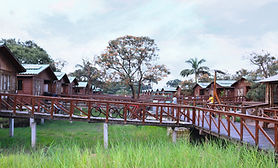
The protection of Santay Island, through the declaration of a National Recreation Area in 2010, is an outstanding example of the implementation of NbS under the category of protected area protection and management approach. This Island, located in the Guayas River, is an important habitat for native wetland flora and fauna. The protection has managed to conserve and restore natural ecosystems, but is also struggling to generate economic and social benefits for the local community.
Peru
Lomas de Lima Regional Conservation Area - Lima

In 2019, the Peruvian Ministry of the Environment approved the delimitation of the Lomas de Lima ACR, the first ACR in the Peruvian capital. Its objectives are “to conserve the ecosystems of lomas, their biological diversity and associated cultural heritage, thus guaranteeing the provision of ecosystem services for the benefit of local populations and contributing to the mitigation of climate change.”
MERESE Abancay - Abancay

In 2014, with the support of Grupo Impulsor, the EPS EMUSAP decided to join a Remuneration for Ecosystem Services scheme, which aims to conserve its main water sources. The EPS-EMUSAP partnered with the peri-urban communities settled in the Mariño, Atumpata and Micaela Bastidas basin, to design and implement conservation measures that would protect 1,590 hectares of ecosystems within the basin and particularly surrounding the Rontoccocha lagoon.
MERESE Moyobamba - Moyobamba

Natural infrastructure project for water conservation, which supported the creation of the Remuneration Mechanism for Ecosystem Services (MERESE) in Peru, and the regulation with a focus on water ecosystem services.
Independencia Green Belt - Independencia

The Independencia Green Belt is the result of the review, systematization and summation of experiences linked to a broad set of plans, projects, decrees and concrete actions that have been developed and implemented by actors from different levels of government, communities and civil society, mainly since 2016 (MDI, 2023), with the initial objective of managing disaster risks and avoiding irregular urban expansion.
Amunas in San Pedro de Casta - Lima
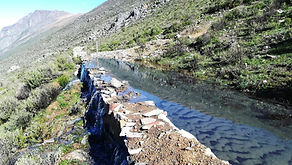
The amunas (water infiltration channels) are part of a set of ancestral management techniques for the Andean landscapes of Peru, focused on the conservation and sustainable use of water. Recognized as part of the Peruvian Natural Infrastructures, the amunas became incorporated into the set of actions installed to conserve water (Aquafondo, 2023). They are located in the upper portions of some basins of the country, where the geomorphological formation allows the percolation of rainwater into the groundwater table (a process locally called “water harvesting”).
Colombia
Main Ecological Structure of Bucaramanga - Bucaramanga

The city of Bucaramanga implemented a project, lasting one year, to contribute to the incorporation of biodiversity criteria and ecosystem services in the city's decision-making. This project gave way to the design of a strategy, projects and activities within the framework of strengthening and managing ecological networks.
Bogotá Agroecological Urban and Periurban Agriculture Program - Bogotá

It is an urban agriculture project that has been implemented in response to the food deficit that occurs in cities due to forced displacement and migration, with Bogotá being the city that receives the largest population. Terraces, community gardens and rural tourism experiences, as well as farmers' markets, have been promoted and recognized as supporting food demand.
Urban green corridors in Medellín - Medellín
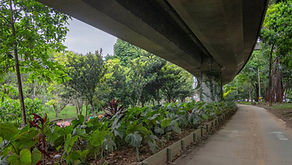
Project implemented by the Mayor's Office of Medellín with the objective of mitigating the environmental problems associated with the heat island, as well as increasing the connectivity of species with the establishment of green corridors.
Municipal System of Protected Areas of Cali - Cali

The Municipal System of Protected Areas of Cali (Simap) was defined in the Territorial Planning Plan of the Municipality of Santiago de Cali as a “set of protected areas, public and private, and complementary conservation strategies, public and private, functionally articulated , with the rules, management instruments and social actors that interact for the conservation of biological and cultural diversity and the supply of ecosystem services.”
Ecological Corridor of the Sinú de Montería River - Montería
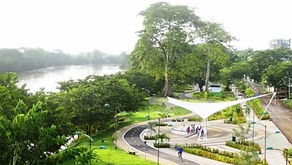
Given the need to create recreational spaces in public spaces, as well as improve environmental conditions in the city of Montería, a linear park is created on the banks of the Sinú River called Parque Ronda del Río Sinú. Through this project, the urban and cultural values of the population are enhanced in their relationship with biodiversity and the territory. Thanks to this project, the linear park became an articulating axis of the city, favoring the processes of social inclusion, tourism development and environmental recovery.


